PACU call schedules are set by each employer and can differ between hospitals, units and contracts. Before accepting a role or starting call, ask how assignments work and where the written policy lives. A short question list can help you compare the answer with what you were told.
The questions below are preparation prompts, not a statement of universal PACU rules. Use your employer’s current policy, offer documents and approved communication channels.
Questions about the schedule
1. How often is call assigned in a typical scheduling cycle? Ask which period the rotation covers and whether the pattern changes by season, staffing or service needs.
2. How are first-call and second-call roles assigned? Ask what each role means at your workplace and how you will know which role you have for a specific date.
3. When does each call period begin and end? Confirm the time zone, handoff point and how schedule updates are sent.
4. How much notice should I expect for an assignment or change? Ask who sends the official update and where to check the current schedule.
Questions about a call-in
5. How should I acknowledge an assignment or availability change? Confirm the approved contact method and who to notify if you cannot respond through it.
6. What response or callback expectations apply? Ask for the written policy and clarification of any terms you do not understand.
7. What is the process if a callback changes my next scheduled shift? Ask who confirms the change and how it should appear in the official schedule and timekeeping system.
Questions about recorded terms
8. How does the employer describe scheduled call and callback time on the pay statement? Ask which written policy explains the terms, and whom to contact about a discrepancy.
9. Are weekends or holidays handled under separate rules? Confirm the exact source and the dates it applies to.
10. Where can I find the current written policy, and who can explain it? Save the policy name, date checked and contact role. Do not rely on another unit’s schedule as your rule.
Make the answers specific
Write the employer’s answer in its own words, along with the policy name or location and the date you checked it. Mark an unanswered question for follow-up. If the schedule changes, use the approved system and ask the responsible person to confirm the current assignment.
Keep personal notes free of patient names, identifiers and clinical details. Follow workplace rules for personal records. A personal planner does not replace the official schedule, time clock, communications or payroll records.
A simple way to keep your own notes
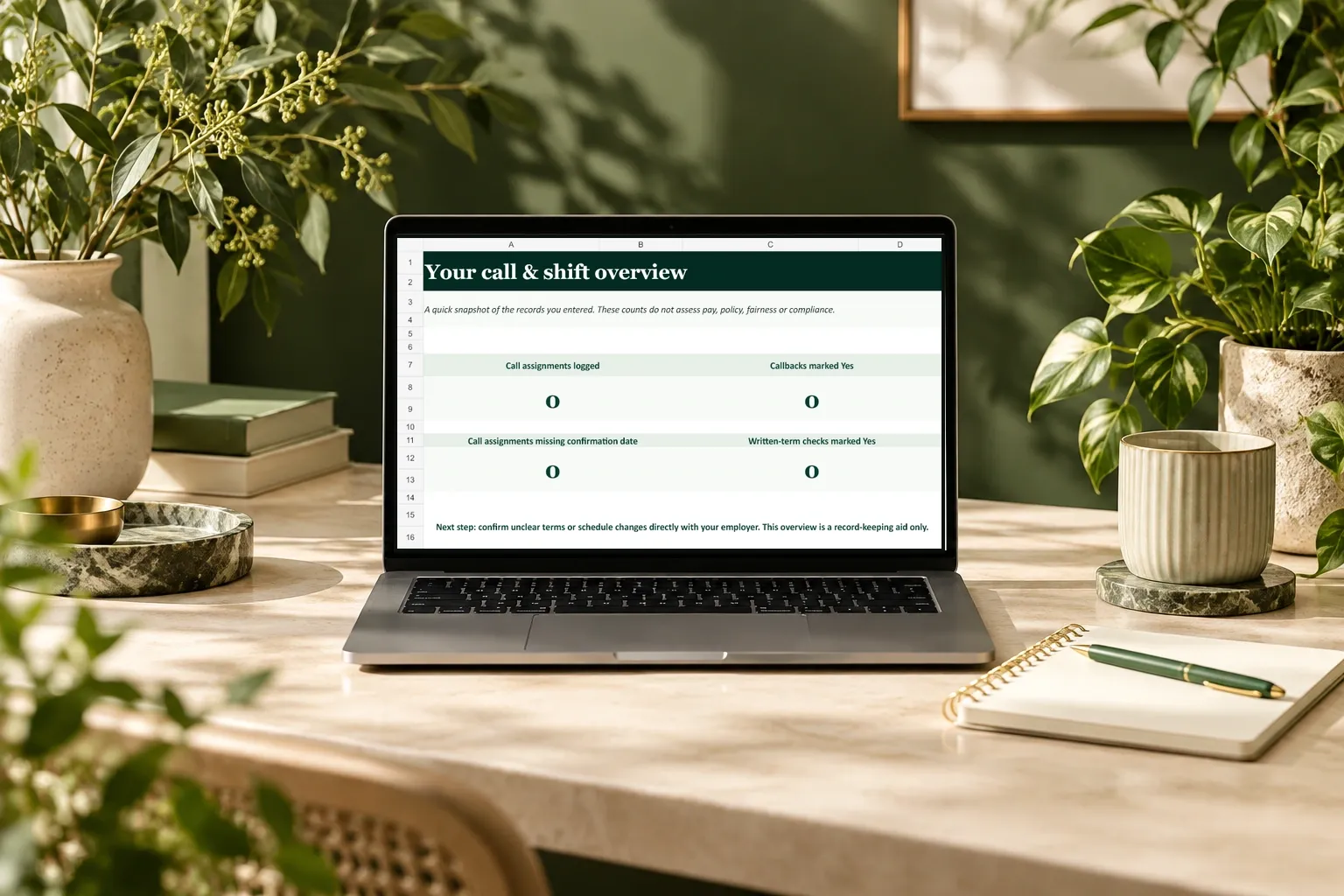
If you want a separate place to record employer-specific call terms, assigned windows, call-ins, callbacks and shift changes, the PACU Call & Shift Planner is a personal four-sheet Excel workbook. It records what you enter and counts entries. It does not calculate pay, overtime, rest periods, legal entitlements or clinical information.
See the PACU Call & Shift Planner and its actual workbook previews
The product is a personal organization tool. Confirm your employer’s policies directly and keep all patient information out of personal files.